
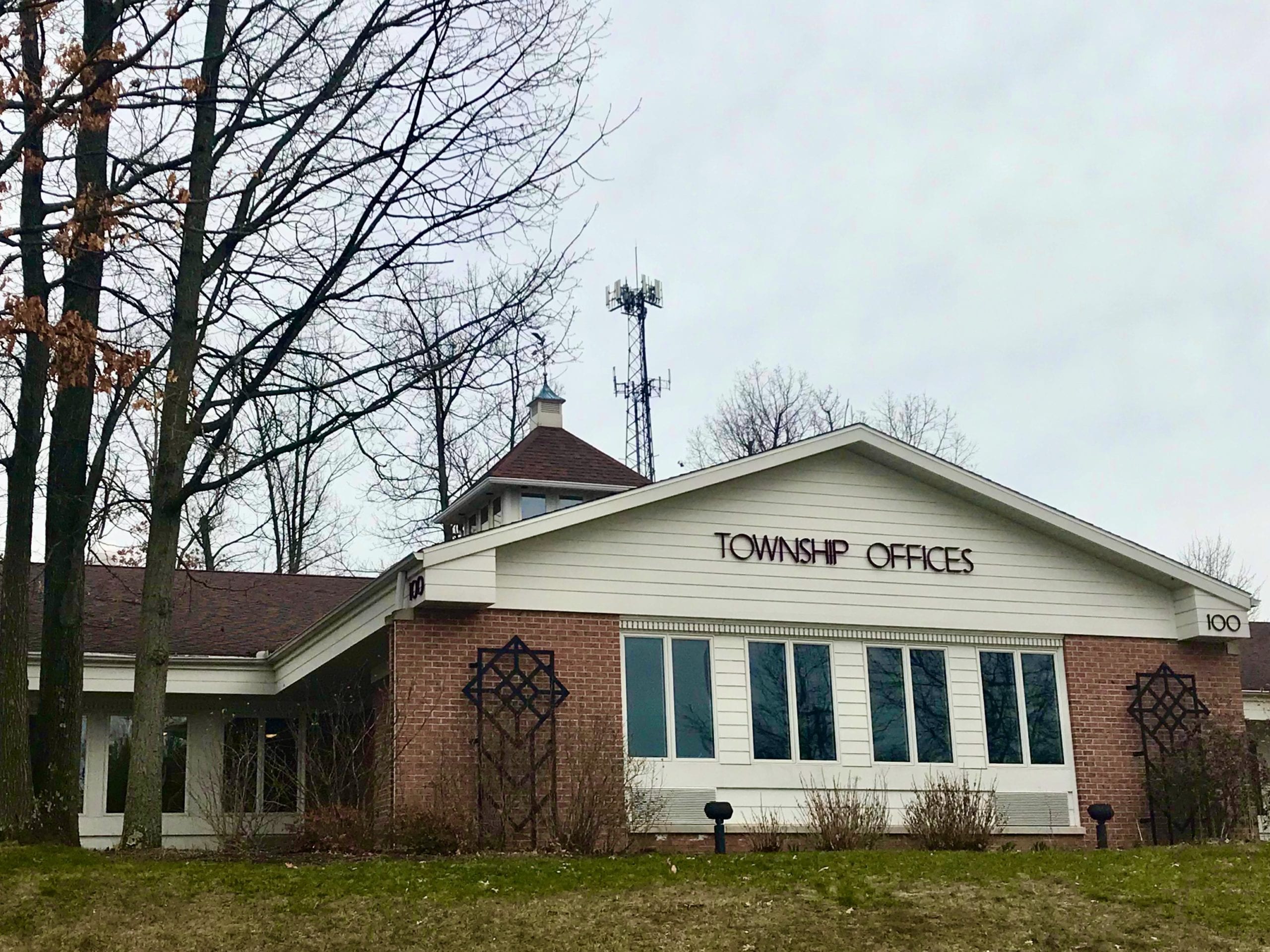
Patton Township’s Board of Supervisors on Wednesday approved new regulations for short-term rental properties, most significantly addressing non-owner-occupied houses used for services like Airbnb and Vrbo.
The changes came after a year-long review following the township’s adoption of a permit requirement for any rental of one day or more. The township previously required permits from the Centre Region Code Administration office only for long-term rentals over seven consecutive days.
“The number one thing we’ve heard over the last year from folks that own the non-owner-occupied short-term rentals is that it’s their small business, and that they’re providing transient housing for Penn State events,” Township Manager Amy Farkas said. “We do not allow small businesses in our residential zoning districts except for the ones that allow hotels.” (The township does allow low-impact and no-impact home-based businesses in residential districts.)
Under the new regulations, non-owner-occupied short term rentals will be allowed only in the following zoning districts:
- C-1 General Commercial
- C-2 Planned Commercial
- C-T Commercial
- Transitional District
- PC Planned Community (Toftrees and Oakwood only)
- Planned Airport District (Non-residential area only)
Existing licensed, non-owner-occupied short-term rentals operating outside of the permitted districts will be allowed to continue as a non-conforming use until the property is sold, or until the license is revoked or lapses, at which point the residence will revert back either to a single-family home or a long-term rental.
Owner-occupied short-term rentals will be allowed in all residential zoning districts. To qualify as owner-occupied, the property owner must live in the home for a period of at least six months and must provide two forms of proof from a list that includes a driver’s license, government-issued identification card, a copy of the most recent year’s income tax return, vehicle registration, voter registration card, statements such as medical or utility services and pay stubs.
Farkas said during a discussion in August that the township has “not had a lot of issues with the owner-occupied short-term rentals.”
“We feel these are in keeping with the home-based business regulations that we have,” Farkas said. “We feel these should be allowed to continue in our residential zoning district, provided that proof of [residence] is provided.”
The ordinance does require, however, that property owners in communities with a homeowners association provide proof that operating short-term rentals is allowed by the HOA.
Occupancy limits for rentals also cannot exceed the occupancy limit set by the Center Region Code Administration Office.
The new regulations additionally address accessory dwelling units, or ADUs, which the ordinance defines as a “secondary living unit to a one- family detached dwelling that has a separate kitchen, bathroom, and sleeping area, existing on the same lot or parcel, either within the same structure as the single-family dwelling, or in a detached building on the same lot.”
ADUs can be used for short- or long-term rentals, but only one rental permit will be issued per owner-occupied dwelling unit.
Farkas said the township has found a number of instances during its short-term rental research of property owners creating apartments that include cooking facilities without authorization.
She added that the state General Assembly appears poised to pass legislation that will allow ADUs by right in residential districts, superseding any local ordinances that may ban them.
“A couple of us — State College, some of the other places in the state — have been working to try to give us the right to ban them as short-term rentals. While we’re waiting for these clear answers from the legislature, we think we need to take some kind of action,” Farkas said in August.
Mobile homes, campers and recreational vehicles do not constitute ADUs under the ordinance and cannot be used as short-term rentals. ADUs on non-owner-occupied properties also cannot be used as short-term rentals.
The township will continue to use a points system for property maintenance and fire code violations, with 10 accumulated points resulting in the revocation of a rental permit for one year. Complaints about rental properties can be made to the Patton Township zoning officer or police department.
Beginning in January, rental housing permit fees in Patton Township will increase from $75 to $150, which Farkas said is consistent with other municipalities in the region.
More Local News
View all Local News
Shanghai Ballet to Perform ‘Giselle’ at Penn State’s Eisenhower Auditorium
Shanghai Ballet will return to North America for the first time in more than five years with a performance of the classic story ballet “Giselle” at Penn State next week. […]

Shiloh Road to See Millions in Traffic Improvements as Development Grows
With a hotel already under construction, hundreds of new residential units planned and other development in the works, the Shiloh Road corridor is preparing for major changes. And with that […]

Halloween Weekend in Happy Valley: Things to Do
Halloween lands on a Saturday this year, and Happy Valley is celebrating all weekend with trunk-or-treats, a haunted corn maze, a big-name concert at the Bryce Jordan Center and late-night […]


